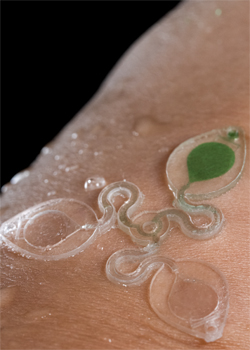
Researchers at the University of Hawaiʻi at Mānoa have developed a 3D‑printed wearable sweat sensor called the “sweatainer.” This compact device collects and analyzes sweat, offering a new path toward easy, non-invasive health monitoring.
Unlike traditional sweat testing which requires specialized handling and lab equipment—the sweatainer uses a unique multi‑draw system, inspired by clinical vacutainers, to collect several separate sweat samples in one wearable device. This enables:
1) Multiple sample collection during a single wear
2) On‑device analysis or easy shipment to laboratories
3) Reusable and more efficient testing compared to single-use sweat sensors
4) Potential for at-home health monitoring and long-term sample storage
Thanks to 3D printing, the sweatainer integrates precision microfluidics in a customizable form factor, showcasing a powerful new use case for additive manufacturing in wearable health technology. It also highlights the vast opportunities for accessible, innovative, and cost-effective prototyping using AM.