Have you ever considered what it means when a life-changing medical device is financially inaccessible to 90% of the people who need it? For amputees seeking a functional bionic hand, that was the reality for years. Conventional manufacturing relied on precision machining and expensive tooling, pushing unit costs beyond what most insurance plans covered — leaving fewer than one in ten insured individuals with access.
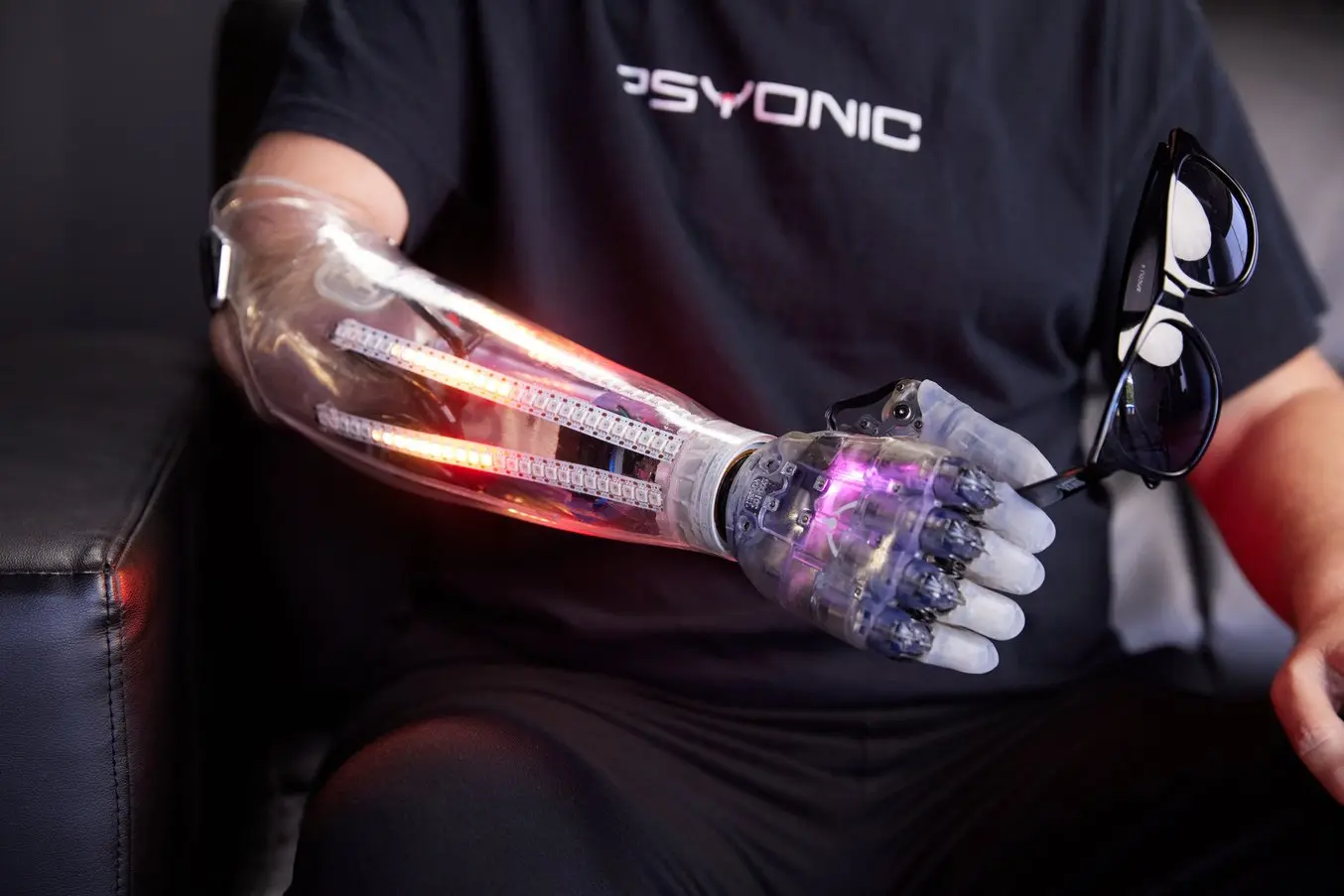
The Ability Hand was built to change that. Developed by medical robotics company PSYONIC, the prosthetic replicates both the function and feel of a human hand. Weighing just 490 grams — lighter than the average human hand at roughly 520 grams — it integrates motors, sensors, and load-bearing structures in a compact form. Meeting the tight tolerances required for internal components with traditional manufacturing proved costly and slow, capping production at around 20 units per month.
Shifting to stereolithography (SLA) 3D printing allowed PSYONIC to iterate through nine generations of the design while keeping costs within insurance reimbursement thresholds. Tough 1500, Tough 2000, BioMed Durable, and Rigid 10K resins are applied across different functional zones, each selected for specific mechanical and biocompatibility requirements. Internal structural parts and finger components are printed directly, allowing both geometry and material to be adjusted zone by zone without retooling.
Production scaled from 20 to approximately 100 hands per month within eight months. Access expanded from 10% to 75% of insured individuals. The device is now used by more than 250 patients and integrated into robotics programs at NASA, Meta, and Google. As biocompatible AM resins continue to advance through medical certification, the path toward broader adoption in active prosthetics becomes increasingly clear.