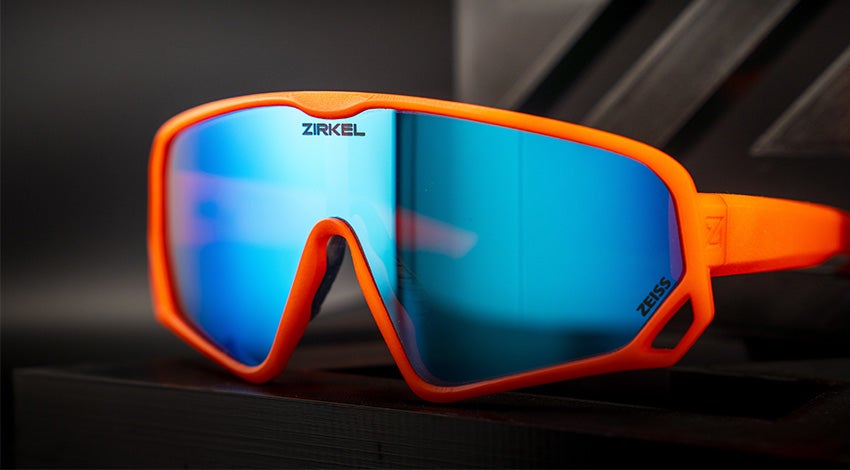
Producing eyewear frames through conventional methods means committing to tooling before a design is validated. CNC machining removes material from a solid block, generating waste from the first cut, while injection molding requires a dedicated mold for each frame variant — an upfront investment that locks the design in place and makes small-batch or custom production economically unviable. For a performance eyewear brand like Zirkel that needed to iterate quickly across multiple styles, that constraint was a fundamental obstacle.
Zirkel switched to selective laser sintering using PA 11, a bio-based polyamide derived from castor bean plants, produced in partnership with Materialise. SLS builds parts directly from a digital file without molds or support structures, which means a new frame design can be tested and produced the same day it is finalized in CAD. Beyond the production flexibility, PA 11 carries measurable material advantages over conventional PA 12: its manufacturing process generates roughly half the CO2 emissions, and castor cultivation requires no rainforest land and does not compete with food crops.
The practical outcome was a significant reduction in the cost and time required to bring new designs to market. One custom frame variant was developed and finalized within 4 hours. Because each pair is built on demand rather than stocked from injection-molded inventory, there is no minimum order quantity and no warehousing risk. Within 13 months of adopting additive manufacturing, Zirkel's product range expanded from 4 to 12 frame styles, with performance validation from elite athletes including Olympian Cody Winters confirming the frames met the mechanical and fit requirements of high-level sport use.