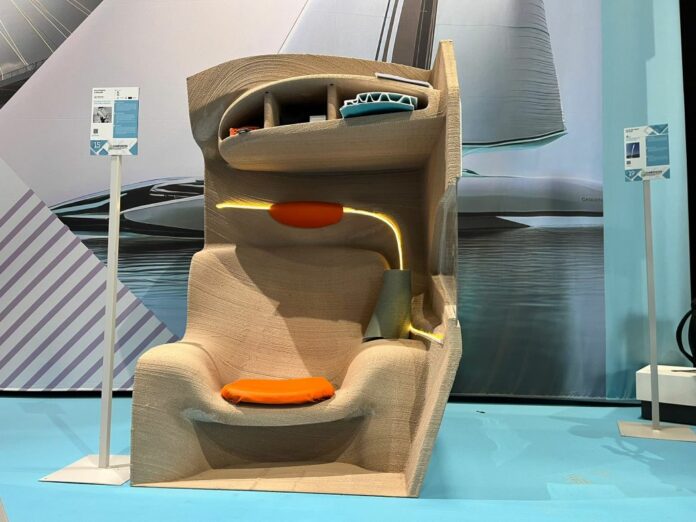
A 37-kilogram structural chair component for a 13-meter catamaran came off a robotic printer after 42 hours, built from a core that is 70% recycled plastic.
That speed is the point: building a structural part like this conventionally starts with a mold, tooled specifically for one hull shape and one customer's layout. Every variation in cabin design or seating arrangement means a new mold, which is expensive enough that most boatbuilders standardize designs rather than customize them.
NUGAE's approach skips the mold entirely. A robotic printing system called UL-LFAM (Ultra-Light Large Format Additive Manufacturing) deposits CoreLight3D, a corrugated, foam-like core made largely from recycled polypropylene, directly into the final structural shape. Boatbuilders then laminate composite skins over that printed core the same way they would over a conventionally molded one, but without ever cutting a mold.
The catamaran under construction is the proof: a structural part built for a real vessel, produced in under two days, with every kilogram saved mattering for a boat's speed and fuel use. Developed with Politecnico di Milano, the project suggests yacht structures could become as customizable as the rest of the vessel already is, instead of being the one part still locked to a fixed mold.